Strategic report · 2026
Product security when the attacker’s clock gets faster.
Mythos is the public capability signal—not the whole story. This report shows how product-security teams can preserve defender time advantage with inventory, authority controls, continuous threat modeling, release evidence, and a tighter finding-to-fix loop.
12
Chapters
90 days
Execution plan
AI-era
Threat models
2026
Edition
Free PDF · No signup required
Core thesis
The security advantage belongs to the team that can turn signals into controlled action.
01
What exists?
Maintain an inventory of AI systems, models, providers, retrieval sources, tools, identities, and data paths.
02
What can act?
Map delegated authority, tool scope, approvals, runtime enforcement, rollback, and blast radius.
03
What changed?
Trigger threat-model and release review when models, prompts, retrieval, tools, providers, or permissions change.
04
What can you prove?
Connect controls to telemetry, test results, release decisions, remediation, and external commitments.
Inside the operating model
From accelerated discovery to a measurable defender control plane.
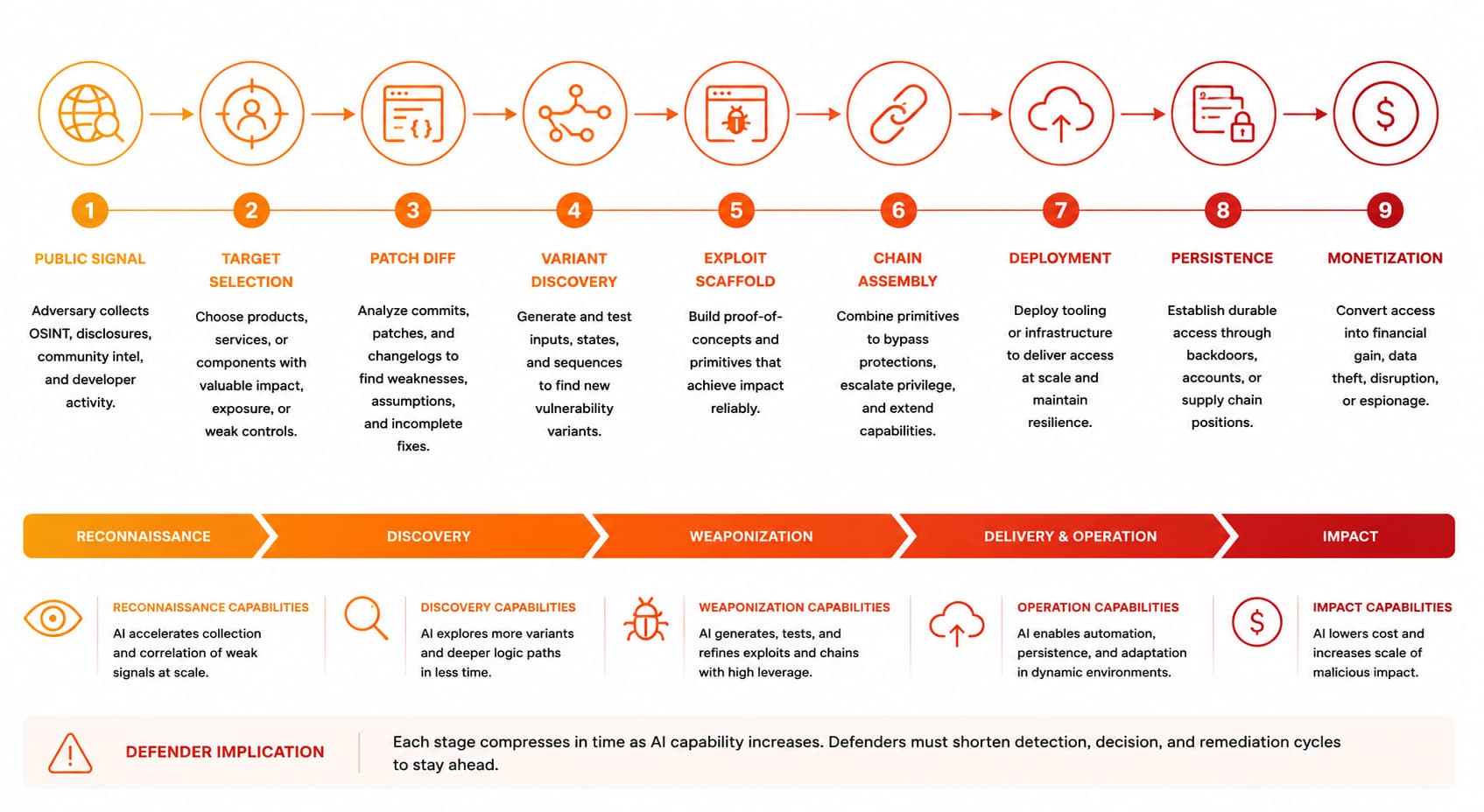
AI-assisted attack chain
A workflow view of how discovery, reasoning, validation, and action can compress security timelines.
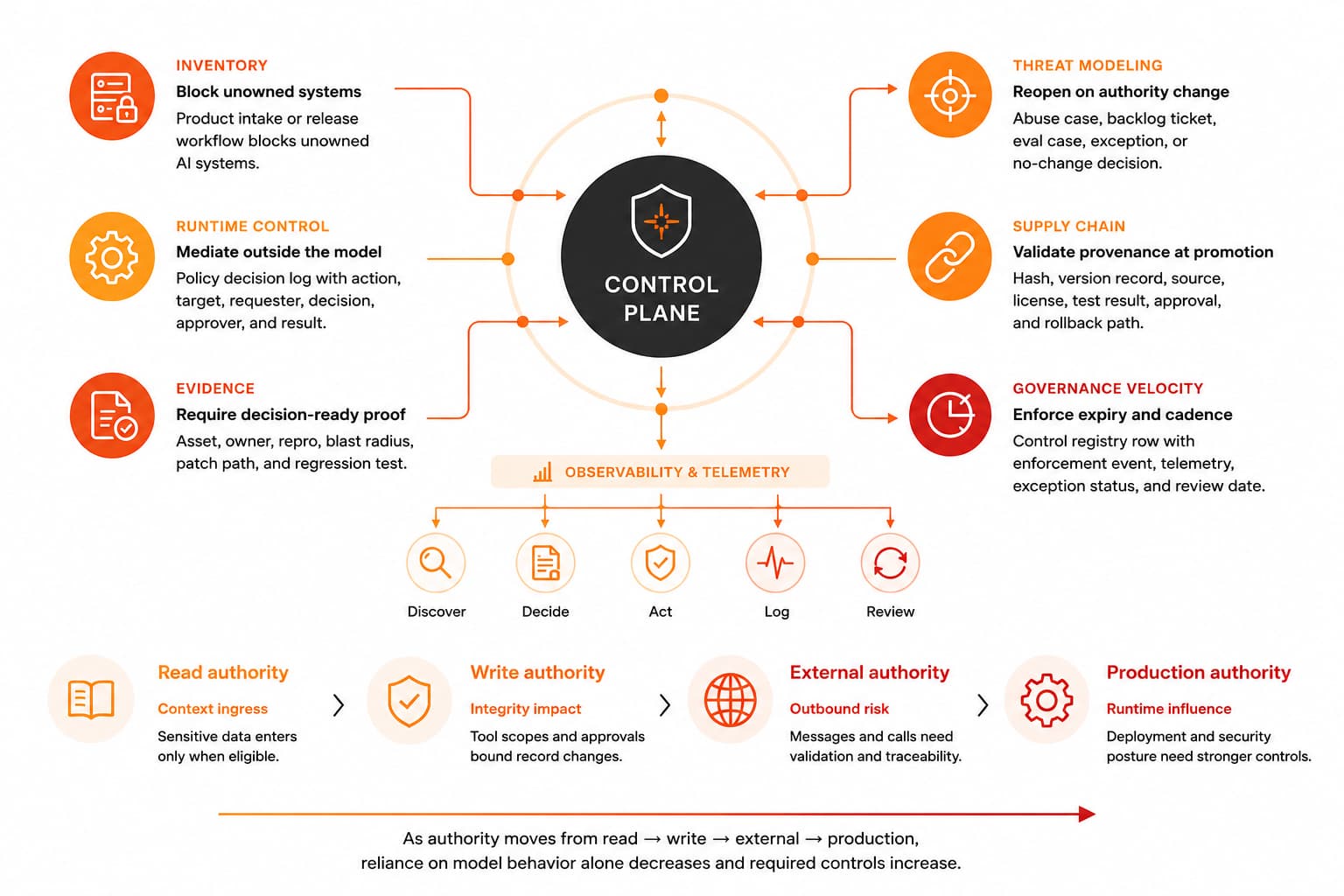
Minimum viable control plane
The operating layer that joins inventory, authority, policy, testing, telemetry, and evidence.
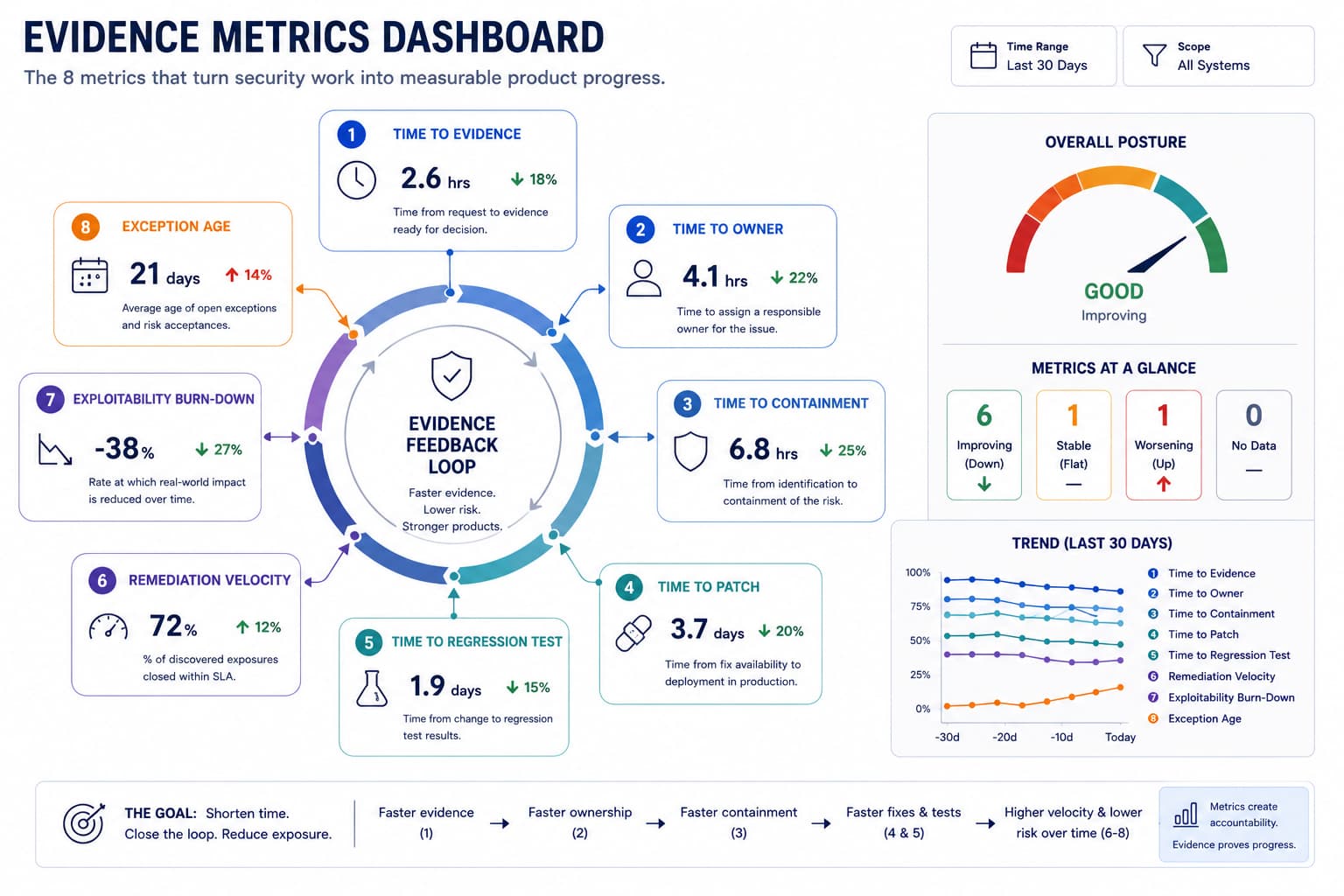
Time to evidence
A measurement model for how quickly security decisions become reviewable engineering proof.
90-day execution arc
Move from concern to a working product-security production system.
Days 0–30
Establish the surface
Inventory AI systems, map authority and trust boundaries, identify release pressure, and baseline evidence gaps.
Days 31–60
Install the control loop
Connect threat models, abuse-path testing, release gates, telemetry, ownership, and remediation workflows.
Days 61–90
Prove the operating model
Retest critical paths, measure evidence latency, rehearse response, and translate executive risk into backlog decisions.