David Wolf · Project Use Case
AI SECURITY · PRODUCT SECURITY · AISECURITY.LLC
aisecurity.llc
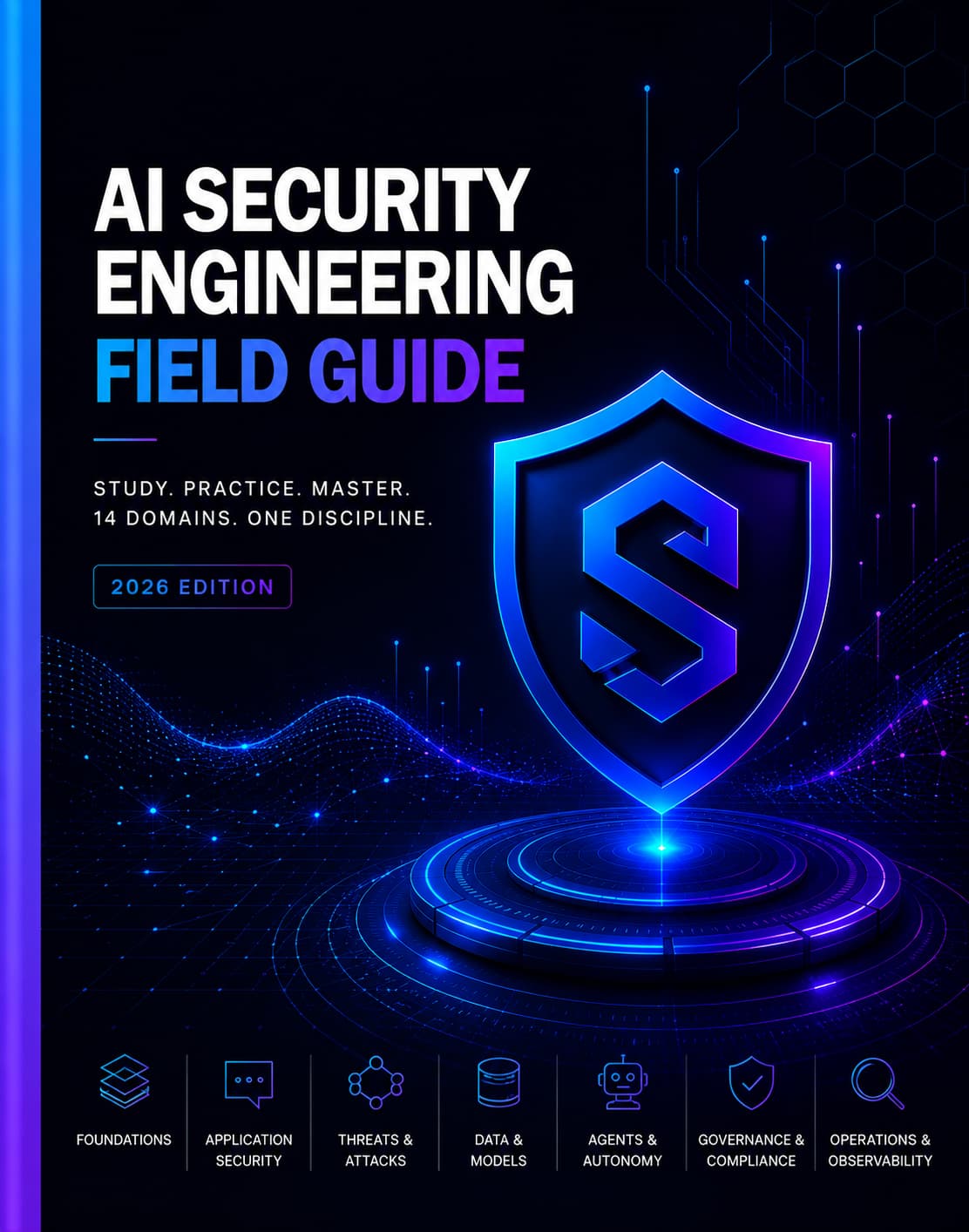
The AI Security Engineering Field Guide
A compact, action-oriented field guide for AI security engineering practitioners working in fast-moving environments.
The AI Security Engineering Field Guide is a compact, action-oriented companion for practitioners who need direct guidance — not long-form reference. It covers rapid threat assessment, control prioritization, AI system review,...
Client
aisecurity.llc
Engagement Type
product
Period
2026
Role
Author, editor, practitioner guide architect
Focus Areas
Rapid AI threat assessment, Control prioritization in constrained environments, AI system design review, Stakeholder risk communication
The Research Narrative
Strategic Problem
AI security work often needs a fast reference that can fit inside a design review, incident call, or sprint without losing technical rigor.
What David Did
David organized the guide around a 16-domain map, four progression tiers, and a remediation loop built around self-assessment and evidence artifacts.
What Became Clearer
The result is a compact, public-safe practitioner asset that supports consulting, hiring, training, and assessment work.
Consulting Proof
This is evidence of turning messy security telemetry into explainable dashboards, alert-quality improvements, and executive-ready operating views.
The Context
The Field Guide is a companion to the competency assessment. It gives practitioners a way to move from a score to a study plan and from a study plan to evidence.
The Challenge
AI security work often needs a fast reference that can fit inside a design review, incident call, or sprint without losing technical rigor.
What I Did
David organized the guide around a 16-domain map, four progression tiers, and a remediation loop built around self-assessment and evidence artifacts.
- •Design a compact, modular guide organized around real practitioner workflows, not theoretical frameworks
- •Prioritize action-oriented content: checklists, decision trees, quick-reference control patterns, communication templates
- •Maintain public-safe content with appropriate caveats throughout
- •Position as the daily-carry companion to the AI Security Engineer's Handbook
The Outcome
The result is a compact, public-safe practitioner asset that supports consulting, hiring, training, and assessment work.
Research Outcomes
Signal Quality
Improved the trustworthiness of operational security signals
Operational Clarity
Translated complex security data into clearer operating views
Stakeholder Visibility
Made technical risk and status easier to explain
Operational Impact
Turned raw telemetry into actionable security intelligence
Capabilities Demonstrated
Dashboard Development
Operational and executive views
Executive Reporting
Security data translated for leadership
Security Analytics
Signal investigation and event analysis
IAM / Access Control
Identity telemetry and access insights
SIEM Alert Debugging
Noise reduction and signal validation
Telemetry Normalization
Consistent and trusted data
Operational Reporting
Actionable views for security operations
Public-Safe Evidence
Shareable insights without sensitive data
Key Deliverables
- •Field guide manuscript
- •Practitioner checklists
- •Quick-reference control patterns
- •Decision trees for AI risk assessment
- •Stakeholder communication templates
Tools & Technologies
Consulting Translation
The reusable pattern is not Disney-specific: normalize fragmented security telemetry, debug low-signal alert behavior, build trusted operating views, and give leadership evidence they can act on without exposing sensitive systems.
Relevant current offers
Portfolio work demonstrates the skills behind these active engagements. Public-safe summaries only — this case study does not imply any ongoing customer relationship or endorsement.
AI Launch Security Review
5–10 business day first engagement. AI surface map, abuse path testing, evidence pack.
AI Product Security Assessment
2–4 week structured review of AI product features, RAG, agents, and data flows.
Pre-Engagement Scoping
Confirm the decision, scope, information boundary, authorization, and procurement path before paid work begins.